How AI is Revolutionizing Customer Service: A Business Perspective
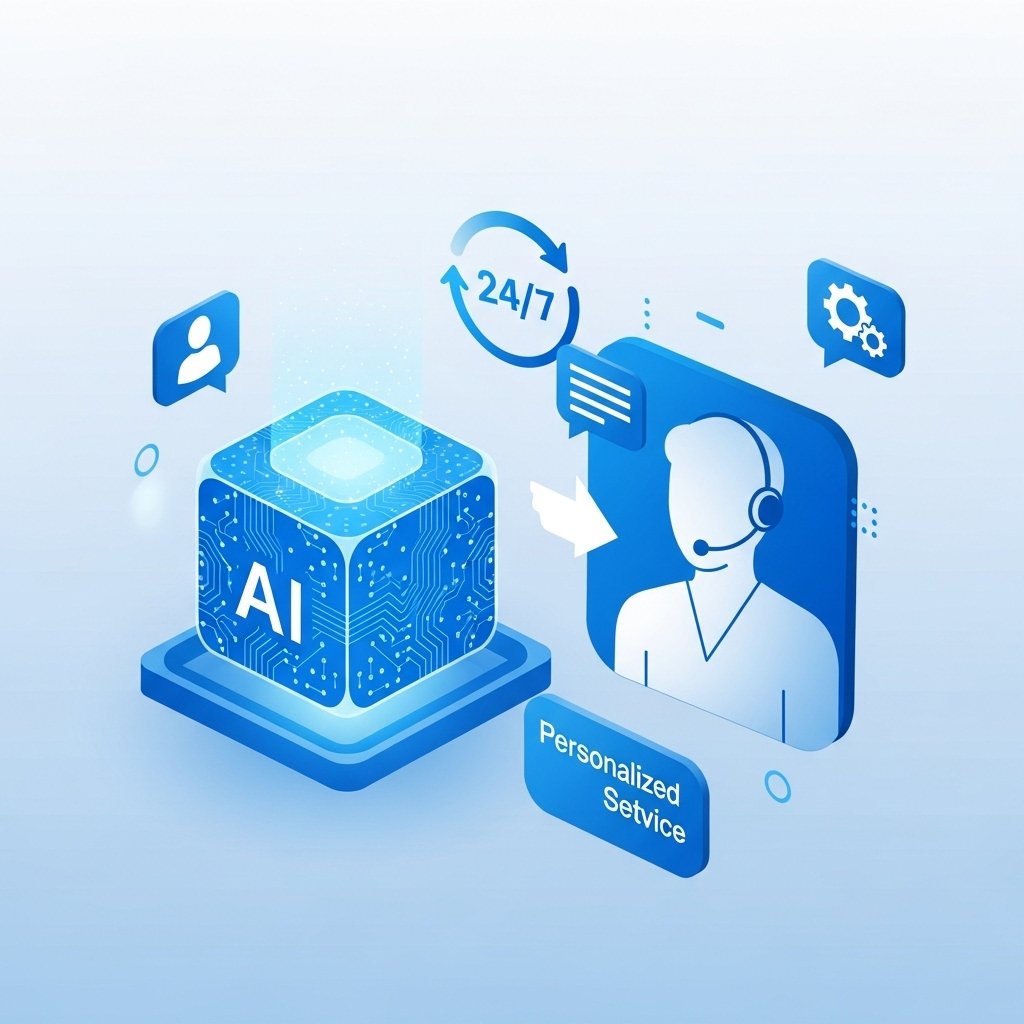
Customer expectations have changed. People expect immediate responses, 24/7 availability, and personalized service. Meeting these expectations with traditional approaches requires either massive staffing or accepting service gaps.
AI changes this equation fundamentally. Businesses can now provide always-on, instantly responsive, personalized service without proportionally scaling costs. This isn't incremental improvement—it's a different operating model entirely.
The question isn't whether to use AI in customer service. It's how quickly you can implement it before customers start comparing you to competitors who already have.
Current AI Capabilities in Customer Service
24/7 Availability
AI-powered systems provide instant responses at any hour. No more "We're currently closed" messages or wait times. Customers get help when they need it, not when it's convenient for you to provide it.
This isn't just about convenience—it's about meeting modern expectations. Customers increasingly expect always-on service, and AI makes it economically viable.
Instant Response
No more queues or "your call is important to us" messages. AI responds immediately to common questions—business hours, policies, order status, basic troubleshooting.
This dramatically improves customer experience while freeing human agents to handle complex issues requiring judgment and expertise.
Consistent Quality
AI provides consistent answers to similar questions. No variability based on which agent is working or how busy they are. Every customer gets the same accurate information.
This consistency builds trust and reduces the confusion that comes from getting different answers to the same question.
Scalable Personalization
AI can personalize interactions based on customer history, preferences, and context—at scale. Every customer can get service that feels tailored to them without requiring proportional human effort.
Practical Applications
Tier 1 Support
AI excels at handling initial customer contact:
- Answering frequently asked questions
- Walking through basic troubleshooting
- Providing account information
- Supporting simple transactions
This allows human agents to focus entirely on complex issues requiring expertise and judgment.
Enhanced Self-Service
AI powers significantly better self-service:
- Help centers that understand natural language questions
- Interactive troubleshooting that adapts to responses
- Automated problem resolution for common issues
Customers who prefer self-service get better tools. Those who need human help get it faster because agents aren't tied up with routine issues.
Agent Support
AI assists human agents during customer interactions:
- Suggesting relevant information in real-time
- Providing quick access to policies and product details
- Summarizing customer history instantly
- Recommending next steps based on similar cases
Agents become more efficient and effective with AI support.
Implementation Considerations
Where AI Excels
AI customer service works best for:
- High-volume, routine inquiries
- Questions with clear, factual answers
- Standard processes and procedures
- Initial customer triage and routing
These are perfect AI applications—high volume, pattern-based, requiring consistency.
Where Humans Matter
Human agents remain essential for:
- Complex or unusual problems
- Emotional or sensitive situations
- Issues requiring judgment calls
- Circumstances outside standard procedures
The goal isn't replacing humans—it's optimizing what each does best.
The Right Balance
Effective customer service combines both:
- AI handles routine matters efficiently
- Complex issues route to human agents
- Handoff preserves context and customer experience
- Human oversight ensures quality
This hybrid approach delivers better service at lower cost.
Planning Your Approach
Start Focused
Begin with specific, manageable use cases:
- Identify your most common customer inquiries
- Implement AI for these routine questions first
- Monitor performance and satisfaction carefully
- Expand based on results
Starting small builds capability and confidence.
Prepare Your Knowledge Base
AI effectiveness depends on the information it can access:
- Document common questions and approved answers
- Maintain accurate, current information
- Organize content for easy retrieval
- Plan for regular updates
Good knowledge management is foundational.
Design Clear Escalation
Always provide easy paths to human support:
- Make escalation obvious and simple
- Train AI to recognize when to transfer
- Ensure smooth handoffs with full context
- Monitor escalation patterns for improvement opportunities
Customers should never feel trapped with AI.
Measuring Impact
Track metrics that matter:
Customer Metrics
- Response time (average and first response)
- Resolution time and first-contact resolution
- Customer satisfaction scores
- Self-service success rates
Operational Metrics
- Volume handled by AI versus human agents
- Escalation rates and reasons
- Cost per interaction
- Agent productivity improvements
Business Metrics
- Customer retention improvements
- Support cost reductions
- Agent capacity freed for complex issues
Common Implementation Challenges
Handling Complexity
AI struggles with genuinely complex or unusual situations. Success comes from:
- Recognizing AI's limits clearly
- Designing appropriate escalation triggers
- Making human support easily accessible
- Continuously improving based on escalations
Maintaining Quality
Regular review keeps AI effective:
- Monitor interactions for quality
- Identify knowledge base gaps
- Ensure information accuracy
- Refine escalation triggers
Customer Acceptance
Some customers prefer human interaction:
- Clearly indicate AI versus human service
- Provide easy access to human agents
- Respect customer preferences
- Monitor satisfaction across channels
Looking Forward
AI customer service capabilities keep improving. Early adopters are building significant advantages—better service at lower cost, capacity to handle growth without proportional hiring, insights from AI-analyzed interactions.
Meanwhile, businesses delaying AI implementation face rising customer expectations set by AI-enabled competitors. The gap in service quality and availability grows.
The businesses winning in customer service aren't necessarily spending more—they're using AI to provide better service more efficiently.
At anelion, we help businesses implement AI customer service solutions that improve experience while reducing costs. We know what works, what doesn't, and how to navigate implementation successfully.
The customer service landscape has changed. The question is whether you'll lead that change or be forced to follow it.
To discuss AI customer service implementation, contact us at
[email protected].