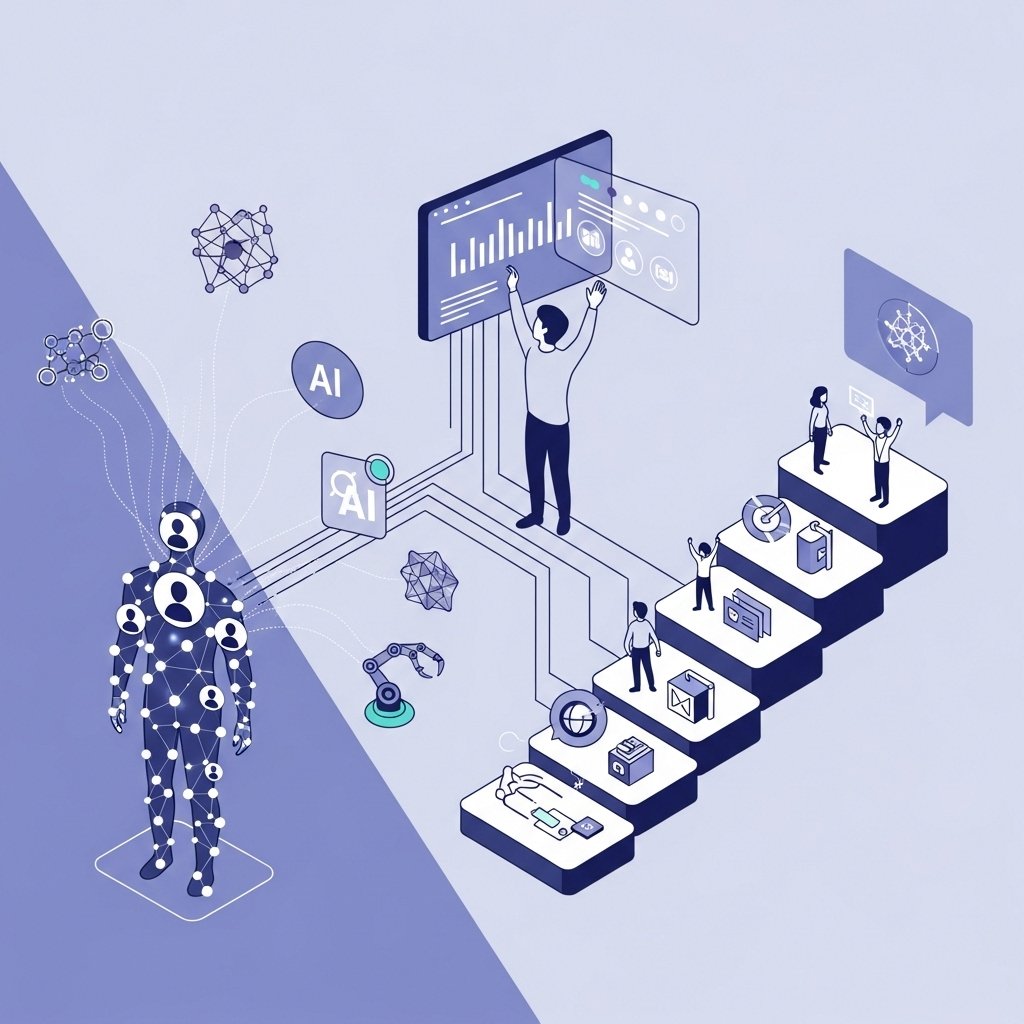
Transforming HR with AI: From Recruiting to Retention
HR teams face mounting challenges—recruiting is more competitive, retention is harder, and employee expectations for personalized development are growing. Traditional HR approaches, often manual and one-size-fits-all, struggle to meet these demands at scale.
AI is providing new capabilities that make HR teams significantly more effective. From identifying the right candidates faster to predicting attrition risk before it's obvious, AI is changing what's possible in human resources.
The HR teams using AI well are recruiting better candidates faster, retaining employees more successfully, and providing personalized development at scale. Those relying solely on traditional approaches are working harder for worse results.
AI in Recruiting
Resume Screening
AI can quickly review high volumes of applications:
- Match qualifications to requirements precisely
- Identify relevant experience effectively
- Flag strong candidates automatically
- Surface overlooked applicants with relevant skills
- Dramatically reduce initial screening time
This allows recruiters to focus entirely on qualified candidates rather than spending hours on initial screening.
Candidate Matching
AI assesses candidate fit more comprehensively:
- Skills alignment with role requirements
- Experience relevance and trajectory
- Career progression patterns
- Success probability based on similar hires
- Cultural and team fit indicators
Better matching improves hiring outcomes and reduces costly mis-hires.
Interview Scheduling
AI streamlines coordination that often takes days:
- Automated scheduling based on availability
- Calendar integration and optimization
- Reminder management
- Time zone handling
- Efficient rescheduling
This reduces administrative burden and improves candidate experience.
Communication Support
AI assists with candidate communication:
- Timely status updates
- Routine question responses
- Process information delivery
- Personalized feedback
- Follow-up management
Maintaining engagement without overwhelming recruiters.
AI in Retention
Engagement Monitoring
AI analyzes signals indicating engagement levels:
- Survey response patterns
- Communication patterns and sentiment
- Performance trend changes
- Participation level shifts
- Behavioral indicators
Early warning enables proactive intervention before employees disengage.
Attrition Prediction
AI identifies attrition risk before it's obvious:
- Pattern recognition from historical data
- Behavior change detection
- Engagement shift identification
- Performance variation analysis
- Tenure and progression factors
Predictions guide targeted retention efforts where they'll have most impact.
Development Recommendations
AI suggests personalized development:
- Skill gap identification
- Learning path recommendations
- Career growth opportunity matching
- Training suggestions aligned with goals
- Mentorship pairing based on needs and strengths
Personalized development supports retention and growth.
Compensation Analysis
AI informs fair compensation decisions:
- Market benchmarking with current data
- Internal equity analysis
- Performance correlation
- Retention risk factors
- Budget optimization
Fair compensation is foundational to retention.
Implementation Considerations
Bias Prevention
AI systems can perpetuate bias without careful design:
- Regular bias audits
- Diverse training data
- Transparent criteria
- Human oversight at key decisions
- Ongoing fairness monitoring
Careful implementation promotes equity and fairness.
Privacy and Ethics
HR AI must respect:
- Employee privacy rights
- Data protection regulations
- Ethical standards and norms
- Transparency requirements
- Individual rights and dignity
Responsible use builds essential trust.
Change Management
HR AI implementation requires:
- Clear communication about goals and methods
- Adequate training provision
- Process updates and documentation
- Feedback mechanisms
- Gradual, thoughtful adoption
Involve stakeholders early and often.
Practical Applications
High-Volume Recruiting
AI particularly helps when:
- Handling large applicant pools
- Recruiting for standard positions
- Managing initial screening at scale
- Coordinating complex scheduling
- Maintaining communication volume
Retention Programs
Use AI to:
- Track engagement trends
- Identify at-risk employees
- Personalize retention programs
- Measure intervention impact
- Continuously improve approaches
Employee Development
Support growth with:
- Personalized skill assessment
- Tailored learning recommendations
- Progress tracking and encouragement
- Opportunity matching
- Career path guidance
Measuring Impact
Recruiting Metrics
- Time to hire reduction
- Quality of hire improvement
- Application-to-hire ratio optimization
- Recruiter efficiency gains
- Candidate experience scores
Retention Metrics
- Voluntary turnover rate reduction
- High performer retention improvement
- Early warning effectiveness
- Intervention success rates
- Employee satisfaction increases
Efficiency Metrics
- Time saved on screening
- Process automation percentage
- Cost per hire reduction
- Administrative burden decrease
- Resource optimization
The HR Advantage
HR is increasingly strategic—attracting talent, developing capability, and retaining key people are competitive advantages. AI makes HR teams more effective at all of this.
Teams using AI well are recruiting better, retaining longer, and developing more effectively—all while handling greater volume. Teams without AI are overwhelmed by administrative work and missing strategic opportunities.
Best Practices
Augment, Don't Replace
Use AI to enhance HR capabilities:
- Speed routine processes
- Surface important insights
- Enable better decisions
- Free time for strategic work
The human element remains central to effective HR.
Ensure Transparency
Be clear about AI use:
- How decisions incorporate AI
- What data is considered
- Where humans remain involved
- How to appeal or discuss decisions
Transparency builds trust.
Monitor Continuously
Regular assessment of:
- System performance and accuracy
- Bias indicators and fairness
- Employee feedback and concerns
- Outcome quality
- Process effectiveness
Provide Training
Ensure HR teams can:
- Use systems effectively
- Interpret AI outputs correctly
- Recognize limitations
- Combine AI insights with judgment
- Refine and improve systems
Looking Forward
AI HR capabilities continue developing. Organizations building HR AI experience now position themselves to leverage advances as they emerge.
The goal is supporting better people decisions while maintaining the human connection essential to effective HR.
At anelion, we help organizations implement HR AI solutions that enhance efficiency while preserving the personal touch that makes HR effective.
Talent is your most important asset. AI helps you attract, develop, and retain it more effectively.
To discuss HR AI implementation, contact us at
[email protected].