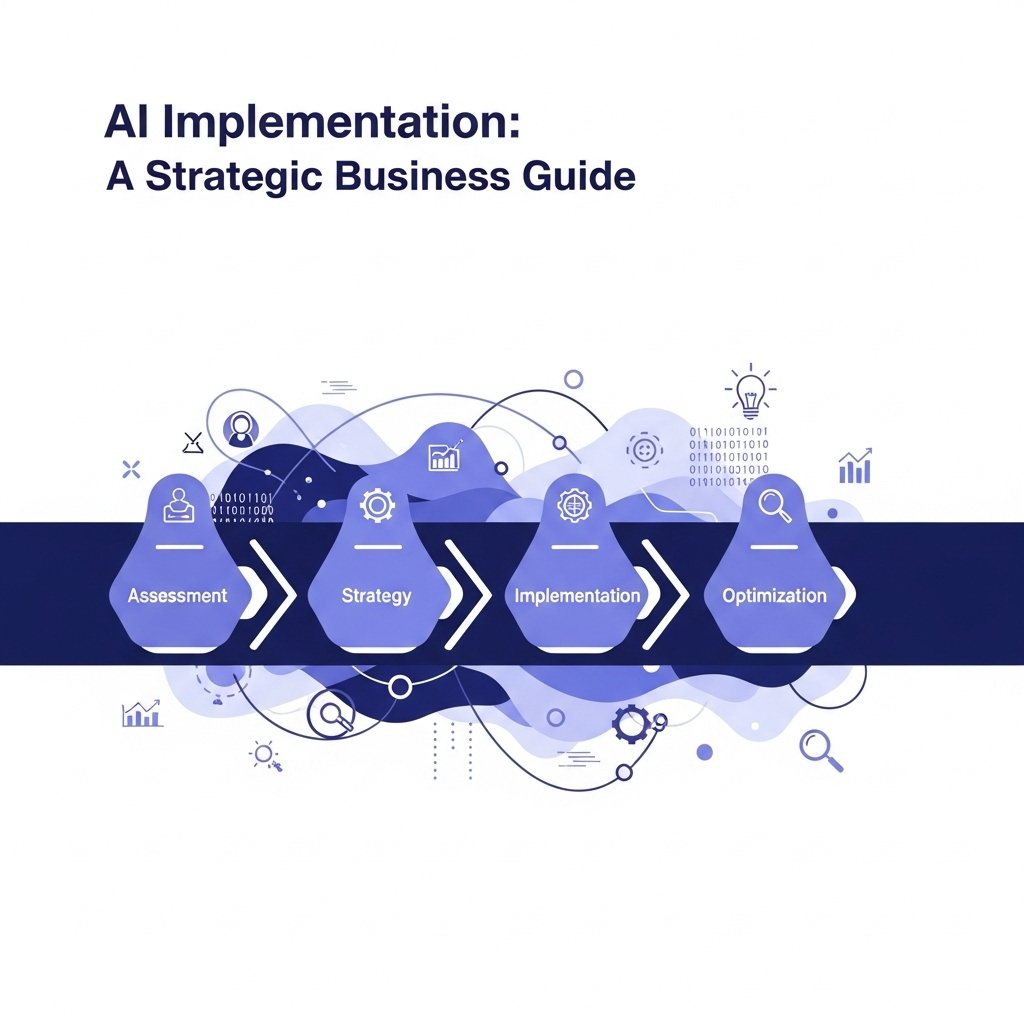
The Complete Guide to AI Implementation in Your Business
AI implementation can seem daunting, but it doesn't have to be. With the right approach, businesses of any size can successfully integrate AI and realize significant benefits. This guide walks you through the complete process—from initial planning to measuring success.
The key is approaching implementation systematically, focusing on practical results rather than getting lost in technical complexity.
Planning Your AI Implementation
Identify Specific Needs
Successful AI implementation starts with clear understanding of what you're trying to achieve. Don't implement AI because everyone else is—implement it because it solves specific problems or creates specific opportunities.
Strong starting points:
- Processes consuming excessive manual effort
- Customer service bottlenecks
- Data analysis that's too slow or limited
- Operations that could be more efficient
- Customer experiences that could be more personalized
Focus on areas where AI's strengths—processing speed, pattern recognition, consistency—align with your needs.
Assess Current Capabilities
Before implementing AI, understand your starting point:
- Data infrastructure and quality
- Technical capabilities and skills
- Staff capacity and readiness
- Budget and resources available
- Existing processes and systems
This assessment reveals where AI can integrate most effectively and what preparation might be needed. Honest assessment here saves significant trouble later.
Set Clear Objectives
Define success in specific terms:
- Which metrics will improve?
- By how much?
- In what timeframe?
- What resources are you willing to invest?
Vague goals like "improve efficiency" don't provide direction. Specific goals like "reduce customer inquiry response time by 50% within 3 months" give you clear targets.
Implementation Phases
Phase 1: Research and Selection (Weeks 1-4)
Research solutions addressing your identified needs. Key considerations:
- Off-the-shelf tools versus custom development
- Integration requirements with existing systems
- Vendor reliability and support quality
- Total cost of ownership
- Scalability for future growth
Take time here. The right solution makes implementation smooth; the wrong one creates ongoing problems.
Phase 2: Pilot Implementation (Weeks 5-12)
Don't go straight to full deployment. Start with a focused pilot:
- Choose one specific use case
- Define clear success criteria
- Implement in a controlled environment
- Gather extensive user feedback
- Monitor performance closely
- Document everything you learn
Pilots let you test assumptions, refine approaches, and build confidence before broader rollout. The investment here pays off significantly.
Phase 3: Scaling and Optimization (Months 4-6)
Based on pilot learnings:
- Address identified issues
- Optimize for better performance
- Expand to additional users or use cases
- Develop comprehensive training materials
- Establish ongoing support processes
Gradual scaling reduces risk while building organizational capability and confidence.
Key Success Factors
Data Quality
AI is only as good as the data it works with. Before implementation:
- Verify data accuracy and completeness
- Establish data governance processes
- Plan for ongoing data maintenance
- Address quality issues proactively
Poor data quality is the most common reason AI implementations fail. Get this right first.
User Adoption
Technology only succeeds when people use it effectively:
- Involve users early in planning
- Provide thorough training
- Address concerns proactively and honestly
- Gather and act on feedback consistently
- Communicate benefits clearly and regularly
Resistance often comes from uncertainty. Reduce uncertainty through involvement, communication, and support.
Change Management
AI usually requires process changes:
- Document current workflows
- Design new processes around AI capabilities
- Plan transitions carefully
- Support people through changes
- Celebrate and communicate early wins
Change management isn't optional—it's central to success.
Common Challenges and Solutions
Integration Complexity
Connecting AI with existing systems can be technically challenging. Address this by:
- Planning integration early in selection process
- Choosing solutions with pre-built integrations when possible
- Allocating adequate time and expertise
- Having technical support available
Don't underestimate integration effort—it's often where delays happen.
Skill Gaps
Your team may need new capabilities:
- Provide comprehensive training programs
- Consider hiring specialists for critical roles
- Work with implementation partners
- Build knowledge gradually and systematically
Invest in capability building—it pays off long-term.
Managing Expectations
AI capabilities have real limitations. Set realistic expectations about:
- Implementation timeframes (usually longer than hoped)
- Performance levels (excellent but not perfect)
- Resource requirements (usually more than estimated)
- Ongoing maintenance needs (continuous, not one-time)
Under-promise and over-deliver rather than the reverse.
Measuring Success
Track relevant metrics to assess impact and guide optimization:
Operational Metrics
- Time saved on specific tasks
- Volume handled versus pre-AI levels
- Error rates and accuracy improvements
- Resource utilization changes
Business Metrics
- Cost reductions achieved
- Revenue improvements realized
- Customer satisfaction changes
- Employee productivity gains
Adoption Metrics
- System usage rates
- User satisfaction scores
- Training completion rates
- Support request volumes
Regular measurement demonstrates value and identifies optimization opportunities.
What Successful Implementation Looks Like
Successful AI implementation typically:
- Addresses specific, well-defined business needs
- Proceeds gradually with learning at each stage
- Includes comprehensive training and support
- Measures results against clear objectives
- Refines continuously based on experience
It's not about implementing the most advanced AI—it's about implementing AI that delivers measurable business value.
The Path Forward
AI implementation doesn't have to be complicated. Start with clear objectives, choose appropriate solutions, implement systematically, support users well, and measure results.
The businesses succeeding with AI aren't necessarily the most technical—they're the most systematic. They plan well, execute carefully, support thoroughly, and learn continuously.
At anelion, we guide businesses through every phase of AI implementation. We've done this many times, we know where the challenges are, and we know how to navigate them successfully.
The question isn't whether AI can benefit your business—it's how quickly you can realize those benefits through effective implementation.
To discuss your AI implementation plans, contact us at
[email protected].