AI in Supply Chain: From Reactive to Predictive Operations
Traditional supply chain management has been largely reactive—you respond to demand changes, supplier issues, and market shifts after they happen. This reactive approach works, but it's inefficient. You're always playing catch-up, carrying extra inventory as insurance, and dealing with problems after they impact operations.
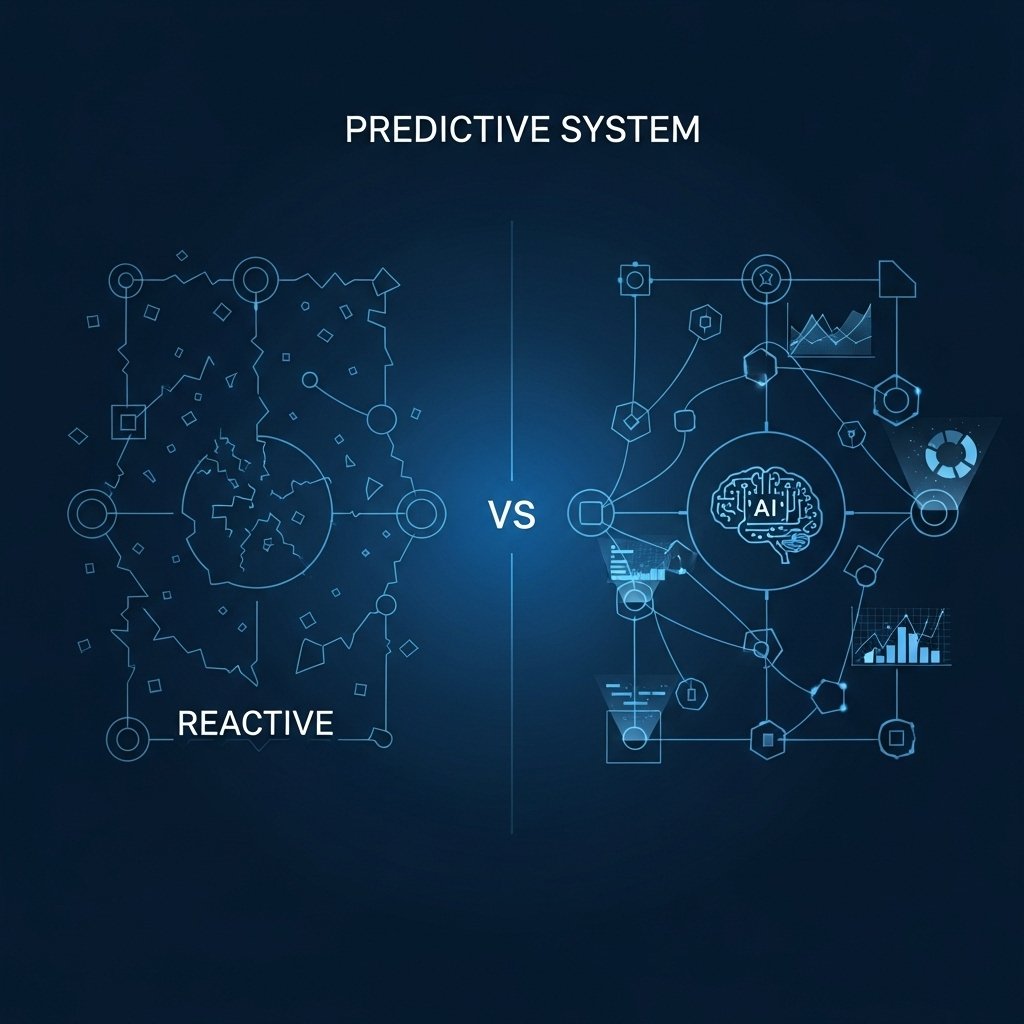
AI is enabling a fundamental shift from reactive to predictive supply chain management. Instead of responding to changes, you anticipate them. Instead of reacting to problems, you prevent them. The efficiency and resilience gains are substantial.
Businesses making this shift are operating with less inventory, fewer stockouts, better supplier relationships, and significantly lower costs. Those still operating reactively are at an increasing disadvantage.
Traditional vs. AI-Enhanced Supply Chain Management
Traditional approaches rely on:
- Historical averages and seasonal patterns
- Periodic reviews and manual adjustments
- Reactive responses to changes
- Safety stock to buffer uncertainty
AI-enhanced approaches enable:
- Real-time analysis of multiple variables
- Continuous optimization
- Predictive capabilities
- Proactive adjustments
This shift from reactive to predictive fundamentally changes operational efficiency.
Key AI Capabilities
Demand Forecasting
AI analyzes multiple factors to predict demand with greater accuracy:
- Historical sales patterns
- Seasonal and cyclical trends
- Market conditions and economic indicators
- External factors (weather, events, social signals)
- Competitive activity
More accurate forecasts drive better inventory decisions and fewer costly surprises.
Inventory Optimization
AI determines optimal inventory levels dynamically:
- Balancing availability against carrying costs
- Identifying slow-moving items early
- Predicting stockouts before they happen
- Optimizing reorder points continuously
- Minimizing capital tied up in inventory
Logistics Planning
AI optimizes continuously:
- Route planning accounting for real-time conditions
- Delivery scheduling for efficiency
- Warehouse operations
- Resource allocation
- Load optimization
Practical Applications
Demand Planning
Improve prediction accuracy:
- Consider more variables than humanly possible
- Update forecasts continuously as conditions change
- Account for local variations and micro-trends
- Respond to emerging patterns quickly
Better predictions reduce both stockouts and excess inventory—often the two most expensive supply chain problems.
Inventory Management
Optimize stock levels dynamically:
- Dynamic safety stock calculation based on actual variability
- Automated reordering at optimal points
- Multi-location optimization
- Obsolescence prediction and prevention
Supplier Management
Enhance supplier relationships:
- Performance prediction based on patterns
- Risk assessment and mitigation
- Order optimization for efficiency
- Lead time forecasting with greater accuracy
Logistics Optimization
Improve delivery efficiency:
- Route optimization considering real-time conditions
- Consolidation opportunities
- Capacity planning with demand forecasts
- Real-time adjustments to changing circumstances
Implementation Approach
Data Foundation
AI supply chain optimization requires quality data:
- Historical sales and demand data
- Inventory records and movements
- Supplier performance data
- Logistics information and costs
- Relevant external data sources
Ensure data is accurate, complete, and accessible.
High-Impact Starting Points
Focus initial efforts where AI provides clear value:
- High-volume products with complex demand patterns
- Complex logistics with multiple variables
- Critical suppliers with risk factors
- Seasonal items with demand variability
Success in these areas builds momentum and capability.
Gradual Integration
Connect AI tools with existing systems systematically:
- ERP integration
- Warehouse management systems
- Transportation management
- Supplier portals
Full integration enables complete benefit.
Measuring Impact
Inventory Metrics
- Inventory turnover improvement
- Carrying cost reduction
- Stockout frequency decrease
- Obsolescence rate reduction
- Fill rate improvement
Operational Metrics
- Forecast accuracy increase
- Delivery performance improvement
- Lead time reduction
- Cost per unit shipped decrease
- Warehouse efficiency gains
Financial Metrics
- Working capital requirement reduction
- Total supply chain cost decrease
- Revenue impact from better availability
- ROI on AI investment
The Competitive Edge
Supply chains are a major source of competitive advantage or disadvantage. Businesses with AI-optimized supply chains are operating more efficiently, responding faster, and serving customers better—all while reducing costs.
Meanwhile, reactive supply chains are increasingly expensive and less reliable. The efficiency gap grows with each cycle.
Best Practices
Validate Predictions
Cross-check AI forecasts:
- Compare with historical patterns and market knowledge
- Test against actual results
- Review for reasonableness
- Monitor accuracy and adjust
Plan for Exceptions
Every AI system needs:
- Override capabilities for unusual circumstances
- Exception handling procedures
- Human review processes
- Clear escalation paths
Continuous Learning
AI models improve through:
- Regular retraining with new data
- Performance monitoring
- Feedback integration
- Adaptation to changing patterns
Cross-Functional Collaboration
Effective supply chain AI requires input from:
- Sales and marketing for demand signals
- Finance for cost considerations
- Operations for execution reality
- Suppliers for capability and constraints
- Logistics partners for delivery factors
Looking Forward
AI supply chain capabilities continue advancing—better prediction accuracy, more sophisticated optimization, greater automation of decisions. Organizations building AI supply chain experience now position themselves to leverage these advances.
The goal is more efficient, responsive supply chains that serve customers better while optimizing costs. AI makes this possible in ways that weren't before.
At anelion, we help businesses implement AI supply chain solutions aligned with their operational needs and capabilities. We've seen what works and know how to navigate implementation successfully.
The shift from reactive to predictive supply chain management is happening. The question is whether you'll lead it or be forced to follow.
To discuss supply chain AI implementation, contact us at
[email protected].