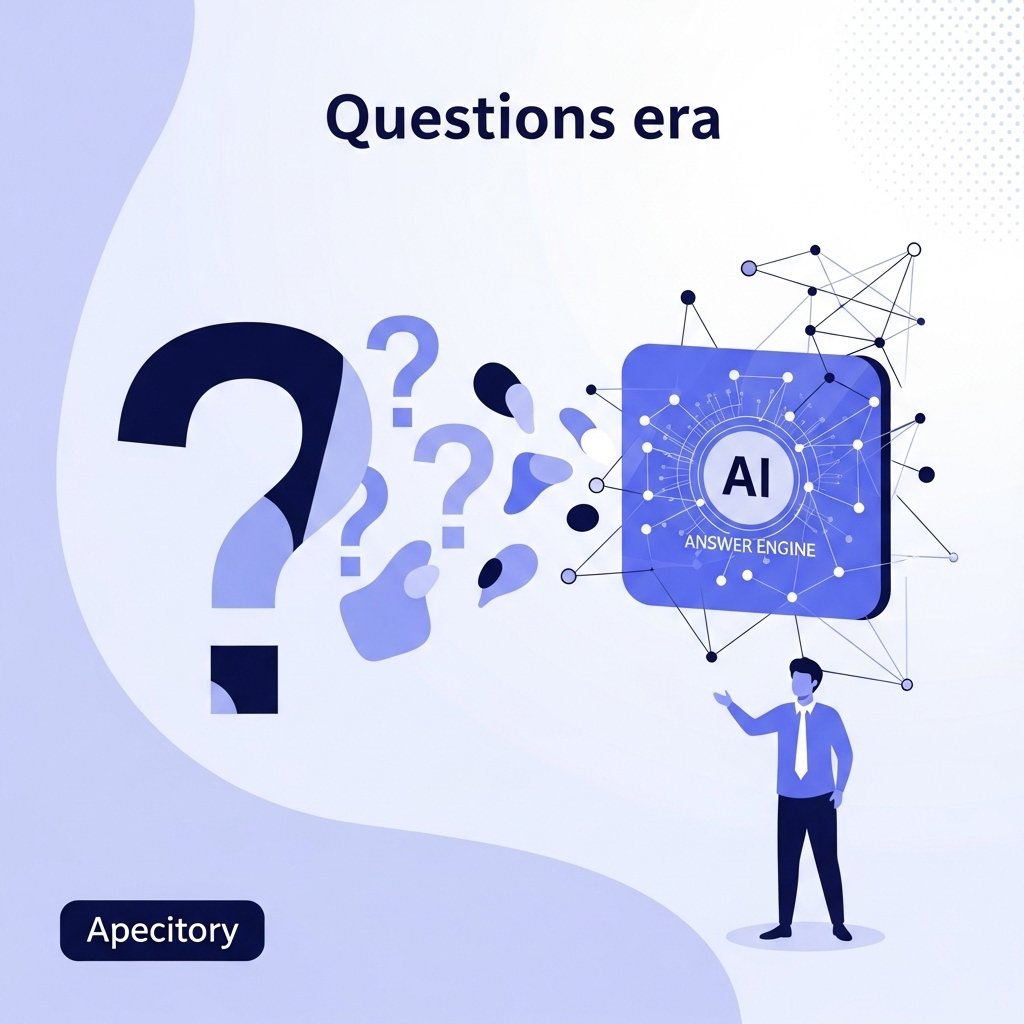
The Questions Era: How AI Changes Everything About How We Work
For generations, having answers meant having value. Expert knowledge, accumulated through years of study and experience, was the primary professional asset. Those who knew more could contribute more.
AI is fundamentally changing this dynamic. With access to vast knowledge bases, AI systems can provide answers to countless questions almost instantly. The scarcity isn't answers anymore—it's knowing which questions to ask and how to ask them effectively.
This shift from answers to questions as the primary skill is profound, and the businesses that recognize it first are gaining significant advantages.
Why Questions Matter More Now
Questions Frame Problems
How you formulate a question fundamentally shapes the answer you receive and the insights you gain. A well-framed question yields actionable insights. A poorly framed question, even with perfect information access, produces limited value.
Consider the difference:
- "How do I increase sales?" — Too broad to be actionable
- "What factors most influence purchase decisions for our product category among customers aged 35-50, and which can we most practically address?" — Guides useful, actionable analysis
The question shapes the answer's usefulness.
Questions Drive Discovery
The right question can reveal insights that wouldn't emerge from simply having information. Asking "Why is customer retention 40% higher in Market A than Market B?" might uncover patterns that inform strategy across all markets.
Good questions unlock value that exists in your data but remains hidden without the right inquiry.
Questions Create Direction
In a world where AI can explore countless directions, human judgment about which direction to explore becomes critical. The questions you choose to ask guide where analytical resources focus.
This is strategic capability—knowing what to investigate, not just how to investigate it.
Characteristics of Effective Questions
Specific Rather Than General
Specific questions yield actionable answers:
- Instead of "How's the market?" try "What trends are affecting demand in our segment this quarter?"
- Instead of "How can we improve?" try "Which three customer pain points should we prioritize based on impact and feasibility?"
Specificity drives usefulness.
Contextual Rather Than Abstract
Provide relevant context:
- "For our customer base—primarily B2B companies with 50-200 employees—what factors most influence software purchase decisions?"
Context helps AI apply general knowledge to your specific situation, making answers relevant.
Actionable Rather Than Theoretical
Frame questions to produce implementable insights:
- "What specific changes to our checkout process could reduce cart abandonment?"
This drives toward solutions you can actually implement.
Layered Rather Than Single
Complex understanding often requires building through multiple questions:
- Start broad: "What are the main factors affecting customer churn?"
- Then specific: "Which factors can we most practically address?"
- Then actionable: "What specific interventions have proven effective for each?"
Layer questions to build comprehensive understanding.
Developing Question Skills
Practice Specificity
Train yourself to add precision:
- Who exactly are we talking about?
- What specific aspect matters most?
- What timeframe is relevant?
- What constraints exist?
- How will the answer be used?
Each addition focuses the inquiry and improves the answer.
Iterate Based on Responses
Use initial answers to refine questions:
- "That's helpful—now focus specifically on cost implications"
- "Given that insight, what if we approached it from the customer perspective?"
Iteration gets you to valuable insights faster.
Break Down Complexity
Complex problems need decomposition:
- Identify key components
- Ask about each component
- Explore relationships
- Synthesize insights
Consider Multiple Perspectives
Ask the same question from different angles:
- "How do our customers view this?"
- "How do competitors approach this?"
- "What do data patterns suggest?"
- "What historical precedents exist?"
Multiple perspectives provide richer understanding.
Practical Applications
Strategic Planning
Better questions improve strategy:
- "What market shifts create opportunities aligned with our capabilities?"
- "Where do customer needs and competitor weaknesses intersect?"
- "What assumptions in our current strategy might no longer hold?"
Strategic questions drive strategic thinking.
Problem Solving
Effective questions clarify issues:
- "What's the root cause rather than the symptom?"
- "What constraints are we accepting that we might change?"
- "What would solving this enable?"
Good questions reveal the real problem.
Decision Making
Questions that inform better decisions:
- "What factors matter most for this decision?"
- "What risks do we need to consider?"
- "What information would change our conclusion?"
The right questions surface what matters.
Learning and Development
Questions that drive growth:
- "What skills will matter most in the next 2-3 years?"
- "Where are gaps between our current and needed capabilities?"
- "What approaches have worked in similar situations?"
Questions drive learning more effectively than passive information consumption.
The Competitive Advantage
As AI capabilities expand, the skill of asking effective questions becomes more valuable. Those who can frame the right questions, provide appropriate context, and iterate toward insight leverage AI most effectively.
This isn't about replacing expertise with questions—it's about using questions to activate and apply available knowledge more effectively.
The businesses pulling ahead aren't just using AI tools—they're developing organizational capability in effective questioning. They're teaching teams how to formulate questions that unlock insights. They're building cultures where good questions are valued as much as good answers.
Meanwhile, businesses that haven't made this shift are underutilizing AI because they're still thinking in terms of "getting answers" rather than "asking questions that unlock value."
The power is shifting from having answers to knowing which questions unlock the most valuable insights. The organizations that recognize this and develop this capability are building a significant advantage.
At anelion, we help businesses develop both the technical AI capabilities and the human skills—like effective questioning—that make AI truly powerful. Implementation without capability development leaves value on the table.
The Questions Era is here. The businesses that thrive will be those that master the art and science of inquiry.
To learn more about building AI capabilities in your organization, contact us at
[email protected].